
CircuWasteVETAfrica is evolving into actionable results with its concrete partnerships, accredited training programmes, and provision of employment opportunities in São Tomé, Namibia, Angola and Ghana.
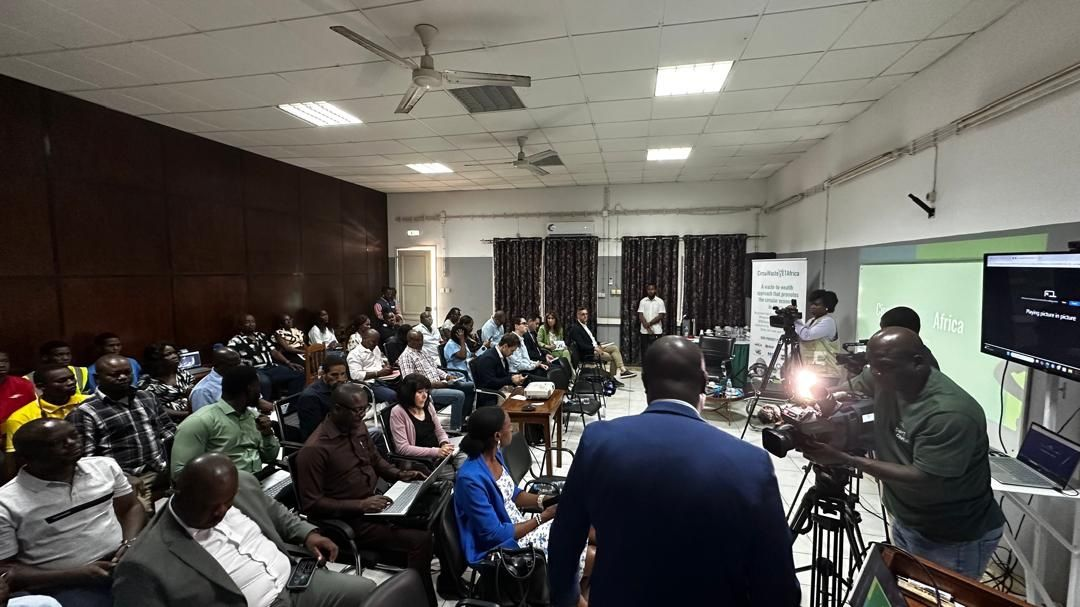
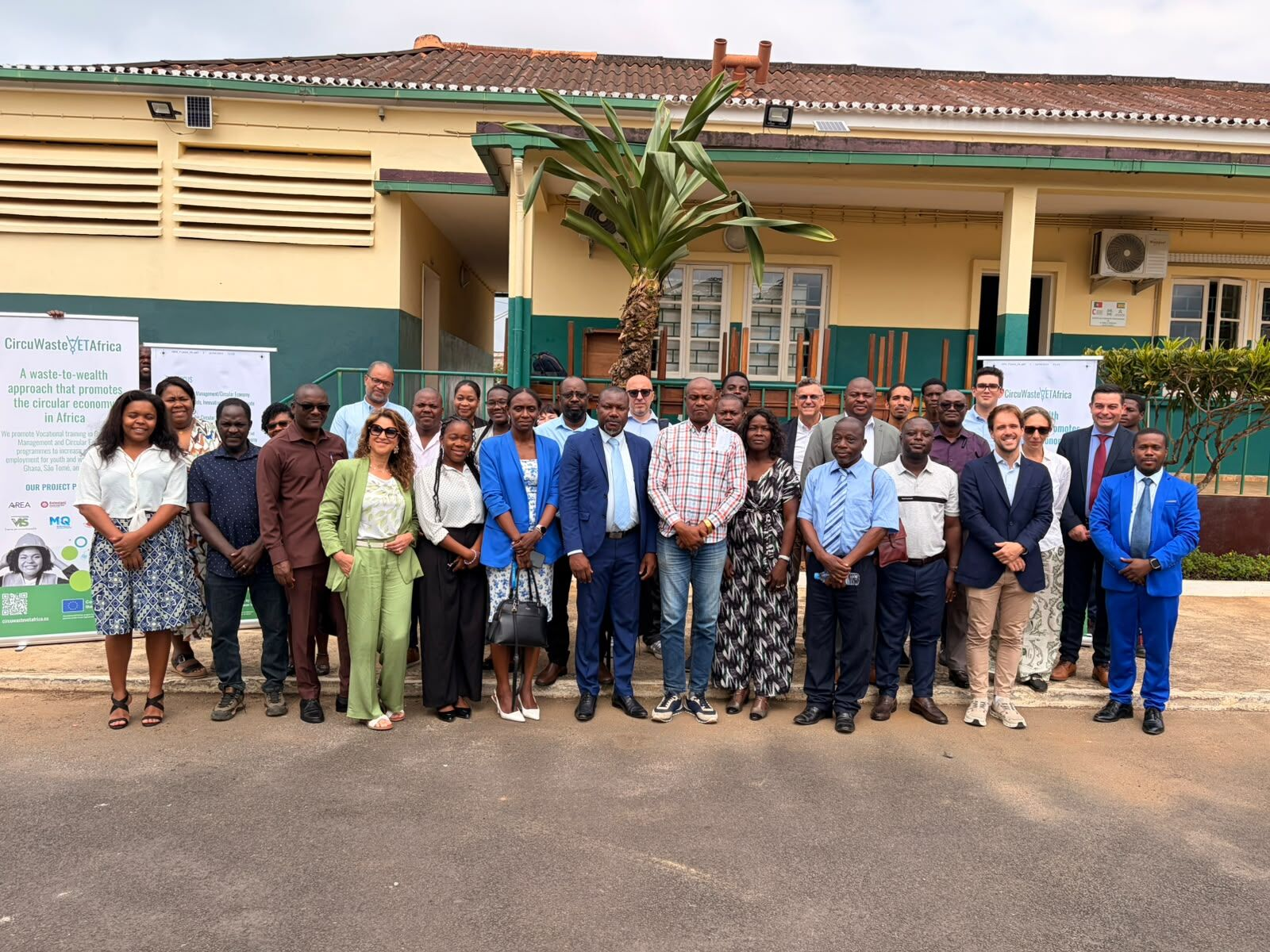
On 1st, July, the project held a capitalisation workshop at the Centro de Formação Profissional de São Tomé e Príncipe (CFPSTP) in Budo-Budo.
At the event, partners shared evidence gathered through stakeholder consultations and labour market assessments to strengthen vocational education and training (TVET) centres, improve employability, and build stronger connections between education and industry.
The Ministry of Labour and Social Security, Democratic Republic of São Tomé and Príncipe, Dr Joucerli Tiny dos Ramos, and Milton Lima, while welcoming participants, reaffirmed the commitment of CFPSTP to preparing young people with the skills required for emerging green industries.
The Ministry particularly described this commitment as a critical pillar for national economic development and job creation.
Adriano Mauro, founder and project coordinator, AREA, reflected on the project’s progress and its growing impact in countries, and Margherita Trestini, Marketing Manager, AREA, also emphasised that the project’s greatest strength lies in its international collaboration.
“Bringing together institutions from Europe and Africa has allowed partners to share expertise while designing solutions that respond to local realities”. She noted
She added that the project has followed a carefully structured process, beginning with stakeholder engagement and skills assessments before developing the learners’ programmes tailored to each country’s context.
These programmes have now produced encouraging results, with over 90 per cent of participants completing the Training of Trainers programme. Building on this foundation, approximately 150 learners have also completed the locally adapted learner programmes designed to address national priorities and labour market needs.
Patrick Quayson, training consultant, Ramseyer Vocational Technical Institute, Kumasi, Ghana and Carlos Cambuta, VIS Angola, presented the project’s stakeholder heatmap, a visual tool that shows the industry-demanded skills and vocational training capacity across Ghana, Angola, Namibia, and São Tomé and Príncipe.
Across the four countries, technical waste management, circular economy practices, health and safety, entrepreneurship, and public-private collaboration consistently emerged as the most urgent skills priorities, while advanced technologies and digital competencies in the labour market show the need for longer-term investment and curriculum development.
While presenting Angola’s work on added-value TVET services, Carlos Cambuta, VIS Angola, demonstrated how stakeholder consultations have led to practical collaboration models between vocational institutions and stakeholders in the waste management industry. In Ghana, partnership with organisations such as TrashSmart and the Kumasi Compost and Recycling Plant (KCARP) is now creating structured internship opportunities, innovation hubs, work-based learning programmes, and entrepreneurship initiatives that allow students to gain practical experience and companies gain a competent workforce.
In São Tomé and Príncipe, the CFPSTP centre has focused on empowering communities through entrepreneurship and circular economy training. The centre has now launched training programmes in the Agripalma community, where participants are learning how to transform locally available agricultural waste into sustainable business opportunities.
In addition, the institution announced the progress made on the course’s accreditation, expected to be finalised before the project ends.
For Angola, stakeholder consultations involving representatives from government, industry, and civil society revealed persistent challenges, including limited access to vocational training, insufficient technical expertise in the circular economy, weak collaboration between TVET institutions and employers, and limited employment opportunities.
In response to these challenges, the centre developed an action plan through four specialised learning modules with structured internship programmes with local companies. These partnerships are expected to strengthen work-based learning and improve graduates’ access to employment within the country’s growing green economy.
Namibia’s presentation also highlighted further signs of industry engagement.
In the country, Coca-Cola has expressed interest in enrolling its workforce to participate in the project’s training programme, demonstrating growing confidence from the private sector in the quality and relevance of the curriculum.
In a session led by Isabel Gonçalves, project manager at MQ and partner of the project, which created a space for new partnerships between VET companies and private companies.
With this foundation set at the workshop, the project’s next phase will focus on formalising partnerships through MOUs and establishing long-term public-private collaboration that can sustain the project’s achievements when it ends.