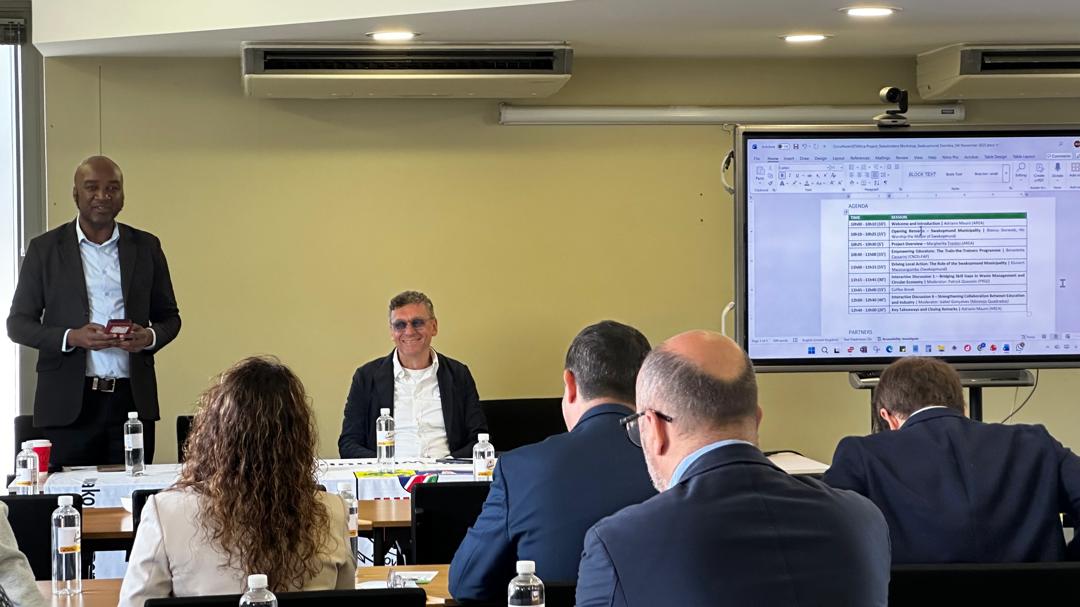

On the 5th of November, stakeholders from government, industry, academia, and civil society convened for the CircuWasteVETAfrica Stakeholders’ Workshop, held at the Swakopmund Municipality and online, to discuss how vocational education and training (VET) can strengthen Africa’s transition toward sustainable waste management and the circular economy.
During the opening session, partners outlined the project’s core objectives, which include assessing skills gaps in waste management and implementing a Train-the-Trainers programme covering digital innovation, micro-entrepreneurship, and circular business models.
The program will also train students in participating countries starting next year, with all modules available on the SmartStep platform, an e-learning platform managed by AREA.
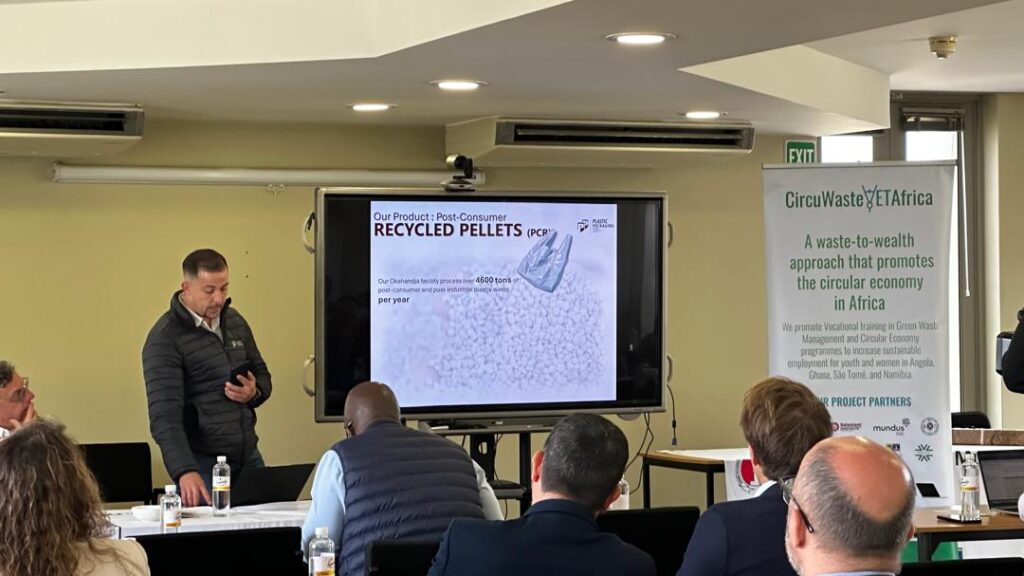
Riaan Reinhardt, Branch Manager, Plastic Packaging Ltd (Walvis Bay), which employs roughly 500 people, emphasised the company’s role in hosting student internships and its growing need for graduates with practical, industry-ready skills.
The company also showcased its recycling processes and the importance of structured training for future workers.
The breakout discussions revealed systemic challenges affecting the sector: As participants discussed the mismatch between TVET training and industry demands, leaving companies unable to find qualified workers, Low compensation, and low professional recognition, particularly in Ghana.
Limited support for informal waste collectors, who play a critical role but often lack health and safety training, restricting their access to TVET programmes, was also a main point of discussion.
The Municipality of Swakopmund shared ongoing efforts to improve training, create controlled access points for waste picking, and explore cooperative models that ensure fairer incomes.
The lighthouse municipality for waste management and public-private partnership development in Namibia is building a worker–company database, which could be integrated into the SmartStep platform to increase the chances of skills matching.
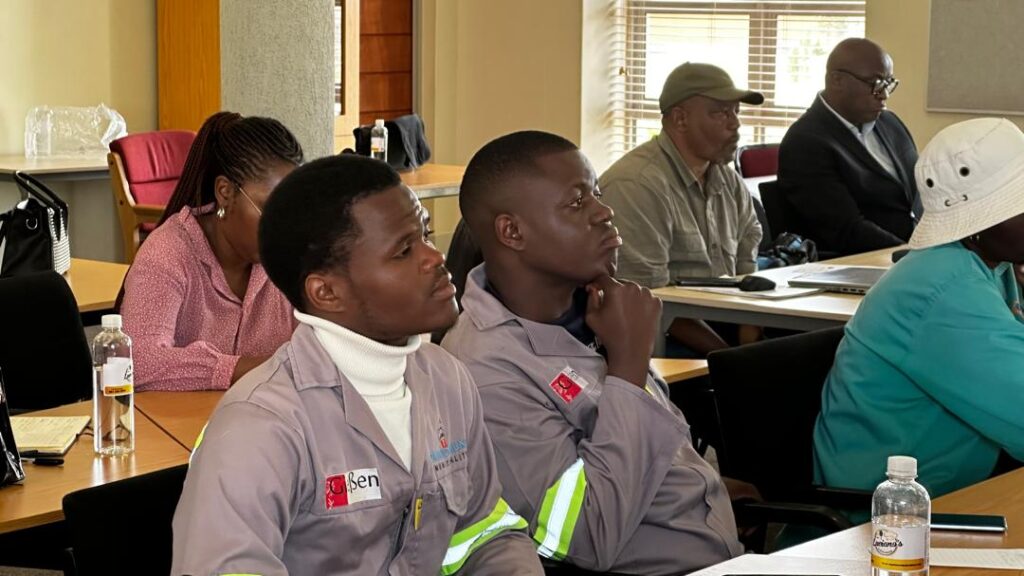
Centro de Formação Profissional de São Tomé e Príncipe, a VET-recognised school based in São Tomé and partner of the project, presented its model for reaching rural and vulnerable communities through training initiatives that engage around 12,500 learners annually. Presbyterian Relief Services and Development, Ghana, also shared successful practices from its six-week industry placement programmes, which improve students’ hands-on experience and employability.
As the workshop progressed, more revelations on the Namibian environmental awareness efforts were made. The country observes an annual Environmental Day, where schools and communities mobilise for collective clean-up and environmental awareness activities.
There were also displays of practical examples of circular innovation in local communities, including: furniture and footwear made from recycled tyres, construction materials derived from repurposed waste, and Jewellery and crafts produced from recycled plastic.